






p75 neurotrophin receptor modulation in mild to moderate Alzheimer’s disease
The 26-week Phase 2a trial met its primary endpoint for safety and tolerability, with biomarker and imaging signals supporting further study.
Read More
PharmatrophiX is a clinical-stage biopharmaceutical company focused on the discovery and development of disease-modifying therapies for neurodegenerative diseases. We are advancing a pipeline of small-molecule drugs targeting p75 as well as the TrkB and TrkC receptors designed to prevent fundamental neurodegenerative mechanisms and to promote synaptic resilience.
About UsPharmatrophiX is a clinical-stage biopharmaceutical company focused on the discovery and development of disease-modifying therapies for neurodegenerative diseases. We are advancing a pipeline of small-molecule drugs targeting p75 as well as the TrkB and TrkC receptors designed to prevent fundamental neurodegenerative mechanisms and to promote synaptic resilience.
About UsOver 7 million Americans are living with Alzheimer’s disease today and with a new case diagnosed every 33 seconds, by 2050, this number is projected to rise to nearly 13 million Americans. According to the Alzheimer’s Association, health and long-term care costs for people living with Alzheimer’s, Parkinsons and other dementias in the U.S. are expected to reach $384 billion in 2025 and $1.1 trillion by 2050.

Americans impacted today, projected to reach nearly 13M by 2050.
A new Alzheimer’s case is diagnosed every 33 seconds.
Annual U.S. spend on dementia care by 2050, up from $384B in 2025.
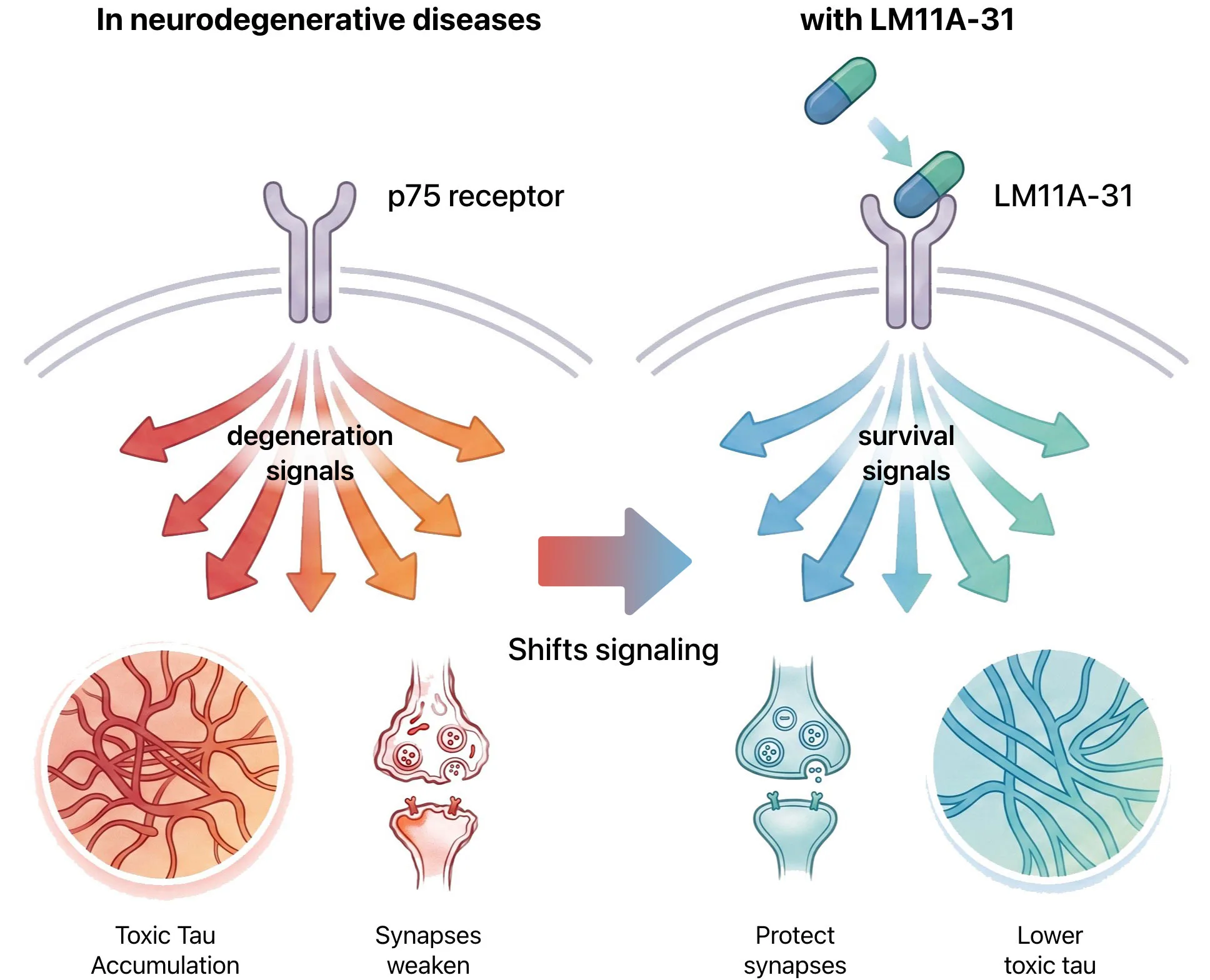
LM11A-31 is a first-in-class small molecule targeting the p75 neurotrophin receptor. It shifts signaling away from degeneration and toward synaptic protection, offering hope for patients and families.
LM11A-31 modulates p75NTR signaling to shift from degeneration toward neuronal protection and synaptic repair.
The 26-week Phase 2a trial met its primary endpoint for safety and tolerability, with biomarker and imaging signals supporting further study.
Read MoreNIA summarizes safety and biomarker findings supporting larger LM11A-31 trials.
Read MoreStanford Medicine profiles LM11A-31 as a synapse-protective approach to slowing neurodegeneration.
Read More